Category Archives: NT

Northern Territory Fishing Reports

New NT FADs

WFS Admin

NT Fisheries press release

****

NT Fisheries has deployed four new Fish Aggregating Devices (FADs) off the Darwin coastline, around the Fenton Patches and North Gutter.

These FADs are designed to attract pelagic species like mackerel, queenfish, and trevally — giving recreational fishers more chances to hook these prized sports fish while helping reduce pressure on our vulnerable reef fish species.

This deployment is part of a trial to test heavy duty mooring gear through the wet season and see how well the FADs hold up in the Top End’s tough marine conditions.

Two of the devices will also feature sub surface habitats to test if this boosts baitfish numbers and attract more pelagic predators.

NT Fisheries will be monitoring the FADs with GPS trackers, surveying fish abundance, and working closely with the fishing community to evaluate the outcomes. Fisheries would love to hear from anyone who does fish them so drop us a line with your feedback and results to fisheries@nt.gov.au

Coordinates for the new FADs are as follows:
◾ FAD 1 – 12°09.500′S, 130°44.833′E
◾ FAD 2 – 12°08.933′S, 130°44.833′E
◾ FAD 3 – 12°10.300′S, 130°38.500′E
◾ FAD 4 – 12°06.667′S, 130°34.133′E

Fishers must not moor their boats to the FADs, as this can damage the equipment or drag it off its mark. Please follow the rules and etiquette outlined on the NT Fisheries website to keep these devices safe and effective for everyone.
NT rainfall trend looks good

WFS Admin

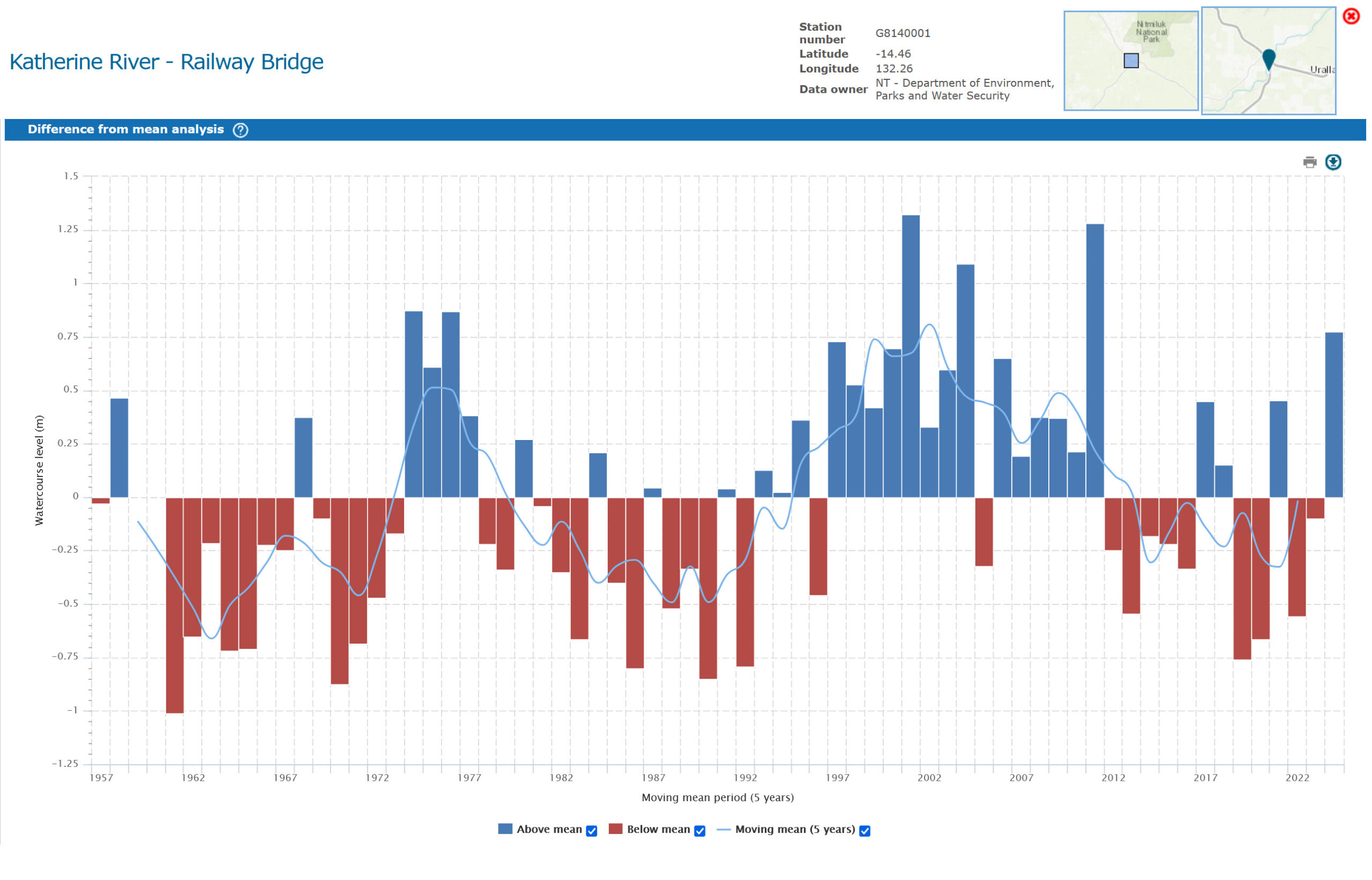
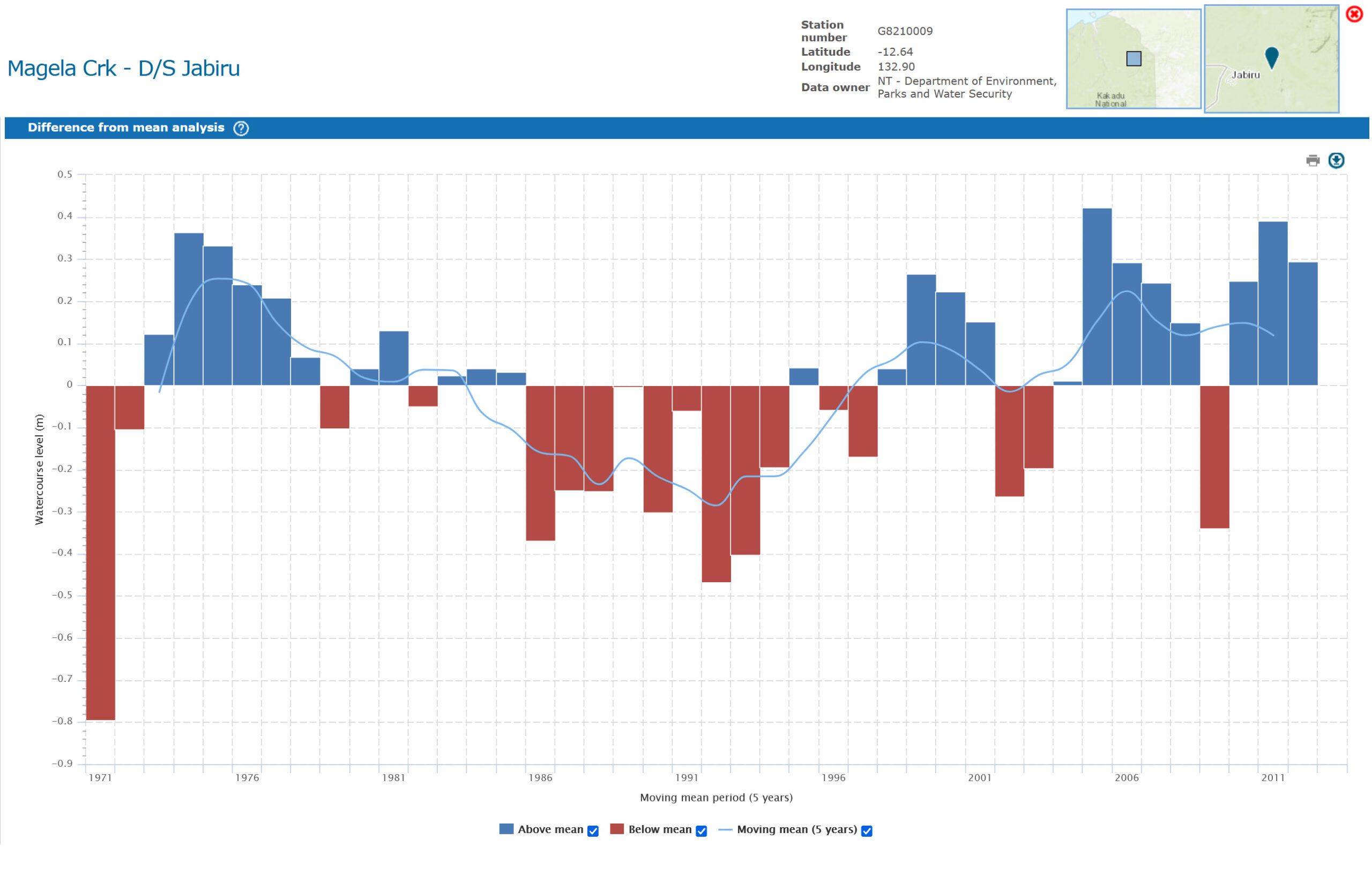
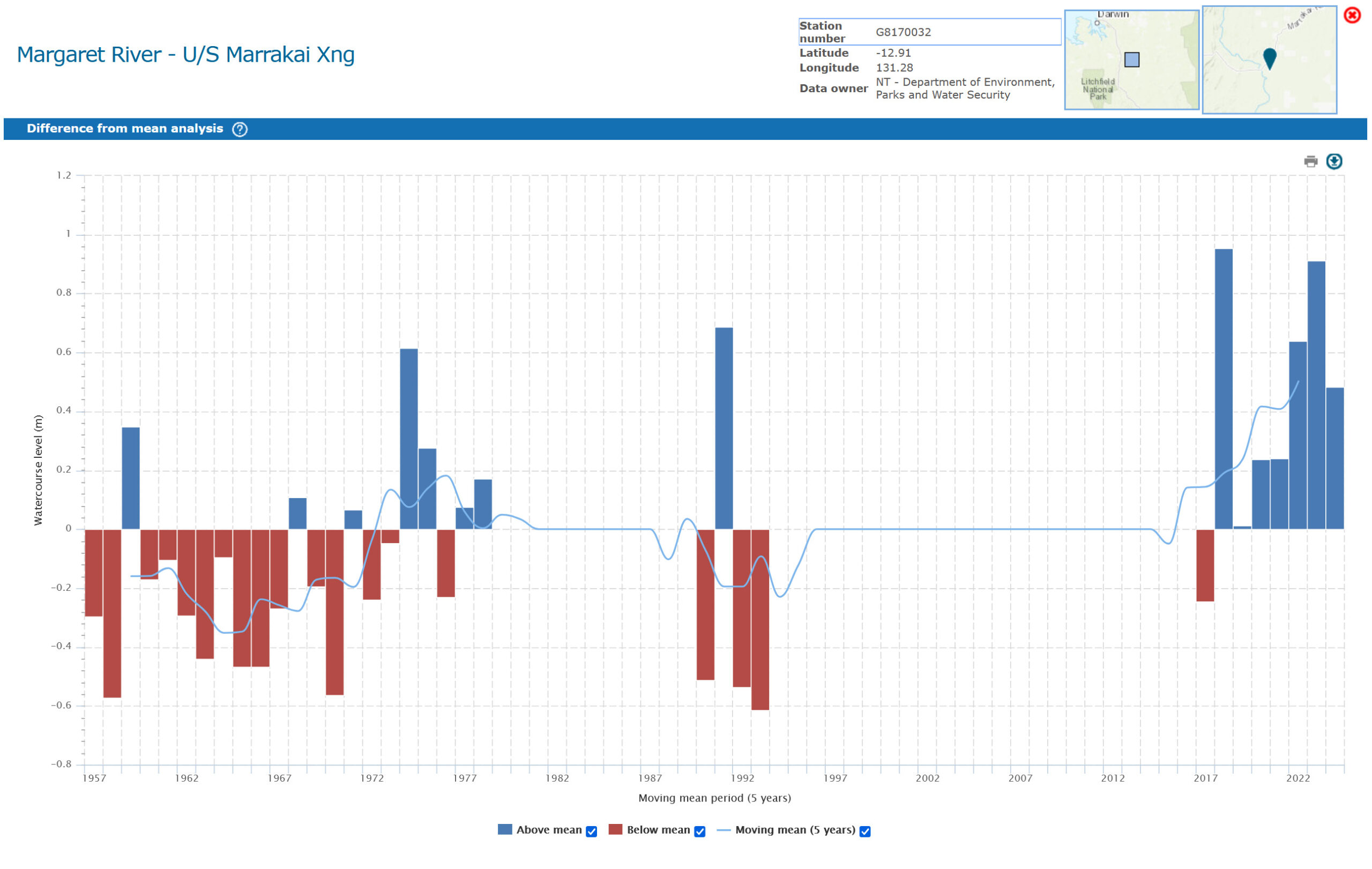
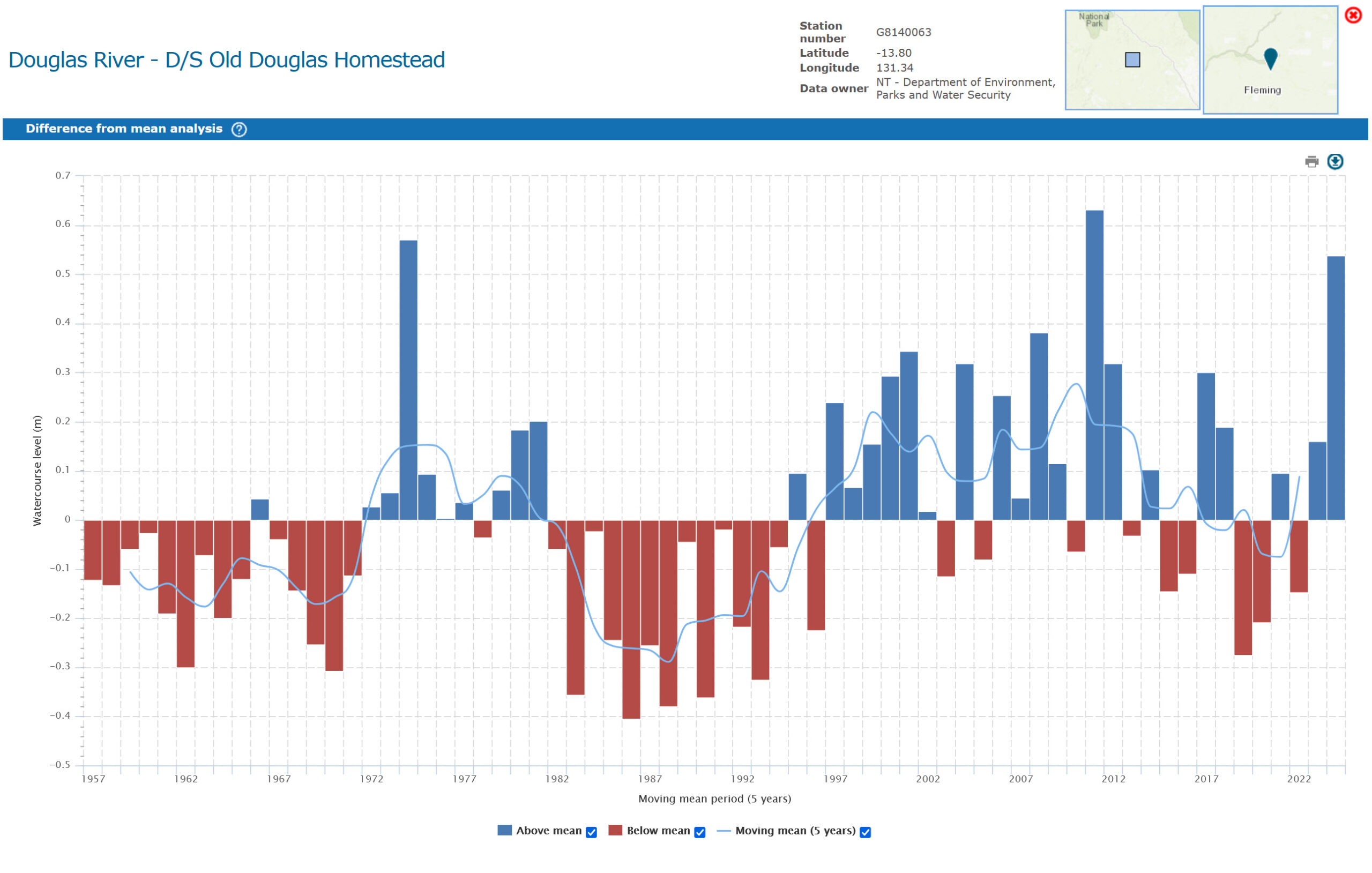
The images above show rainfall at some relevant Top End water gauges.

While the SA suffers a mass fish die-off from likely climate change-related events, the Top End is going from strength to strength thanks to increasing wet season rainfall.

Increase in annual rainfall over past decades
The Top End has had a statistically measurable increase in annual rainfall. For example, a climate-guide report from the Northern Territory Bureau indicates that from a comparison of two 30-year periods (1959-1988 vs 1989-2018), annual rainfall increased by about 110 mm (11%), from around 940mm to 1050mm.

Bureau of Meteorology – wet season / monsoonal rainfall increase
The wet season (monsoon period) rainfall has also increased in some key stations. For instance, Darwin’s wet season rainfall between Nov-Apr increased by 146mm compared to the earlier 30-year period. Daly Waters increased by 81mm.
Bureau of Meteorology

Seasonal shifts and variability
Rainfall in the build-up (the period leading into the wet season, often Oct-Dec) appears less reliable in parts of the Top End, especially the eastern part. That is, large inter-year variability and “false starts” of monsoon rains have been more common. There is also evidence that the earlier and later parts of the wet season (and perhaps associated with the monsoon onset) have become more variable. Some studies note a decrease in rainfall in the early and late wet season in certain parts.

Recent years
In 2024, for example, the Northern Territory as a whole saw rainfall totals well above average, and in some parts of the Top End or NW NT, the highest on record.

What is not fully settled
How much of the observed increase is due to long-term climate change vs natural decadal variability (e.g. ENSO, the Indian Ocean Dipole, Pacific Decadal Oscillation) is still being explored. The timing of the monsoon (onset, duration, breaks) is variable and some trends (later onset in some years) might be emerging, but the confidence is lower. The spatial differences are strong: some parts of the Top End (east vs west) show different trends. Some subregions have more reliable increases, others are more variable.

Overall conclusion
Yes, the rainfall over the Top End has been trending upwards, particularly in the wet season / monsoonal rainfall period and in aggregate annual totals, over the past several decades. But the increases come with more variability—some years of low rainfall, shifts in when rain falls, and differences in how reliable parts of the region are.

Heat is of course the wildcard, the heat trend is upward and may lead to increased billabong mortality and marine heatwaves etc.


Mandorah boat ramp project finished

WFS Admin

The new Mandorah boat ramp facility, located across the harbour from Darwin city

Construction of the new Mandorah Marine Facilities has been completed.

The facilities include a new boat ramp, ferry terminal with toilet facilities, car park upgrades and an improved experience for ferry users, including access improvements for people with disability.

The facility includes a gangway platform leading to a floating pontoon that features bench seating and shade for ferry users. The pontoon is designed for a capacity of 150 people.

An extended car park includes a bus parking bay and four accessible car parks at the top of the access ramp to gangway.

About 80,000 tonnes of rock was used to build the two breakwaters, which form the new basin to provide protection from sea swells and wave action.

The new facilities are currently being commissioned for ferry operations and are expected to be open to the public from 16 August 2025. The $85 million project was delivered by SMC Marine.

For more information about the project go to: https://infrastructure.nt.gov.au/project/mandorah-marine-facilities

Drone footage: https://youtu.be/u_q2z1mBcvQ