Category Archives: Fishing Spots

Corio Bay, Queensland

Corio Bay
Corio Bay
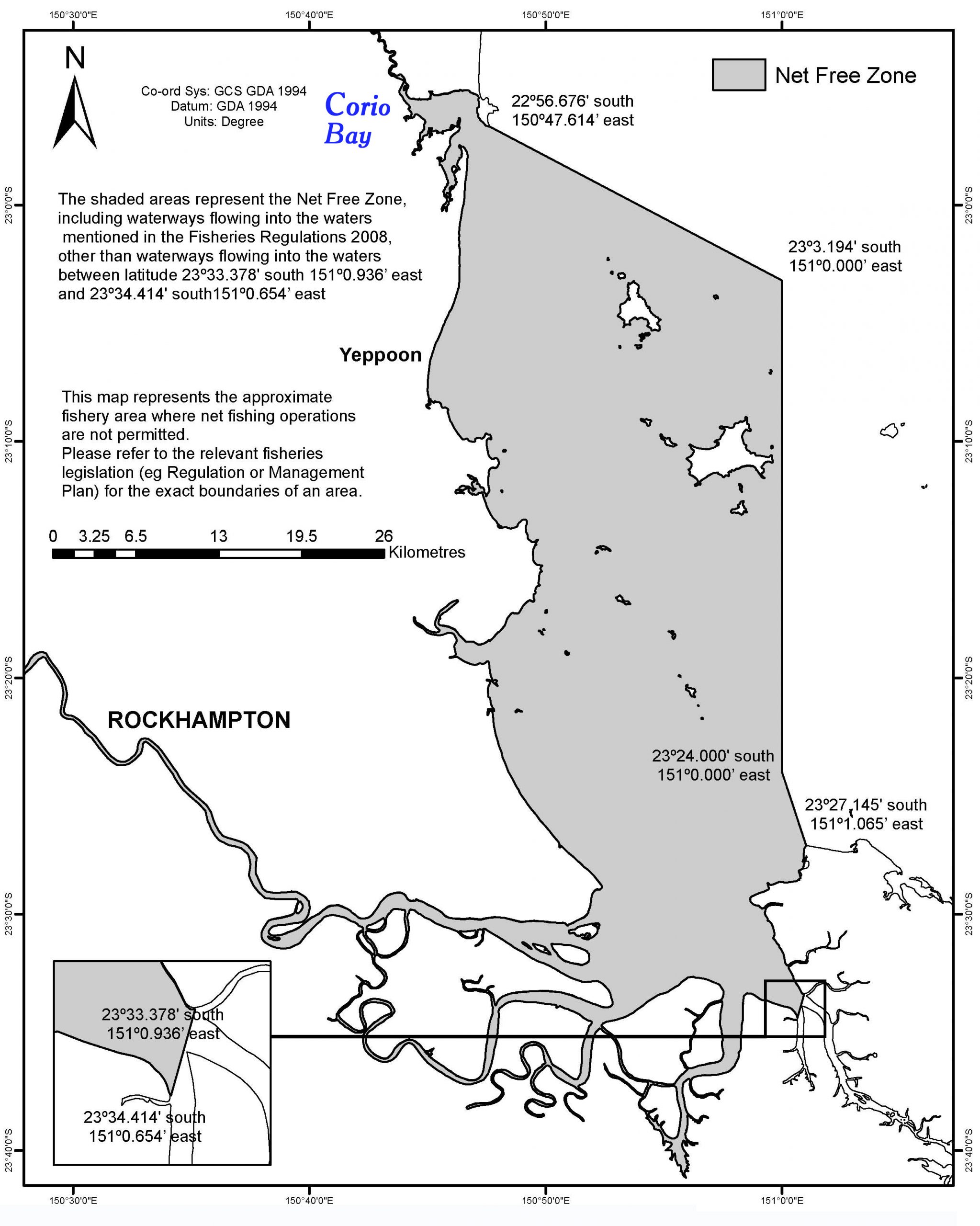
The Capricorn net closure area

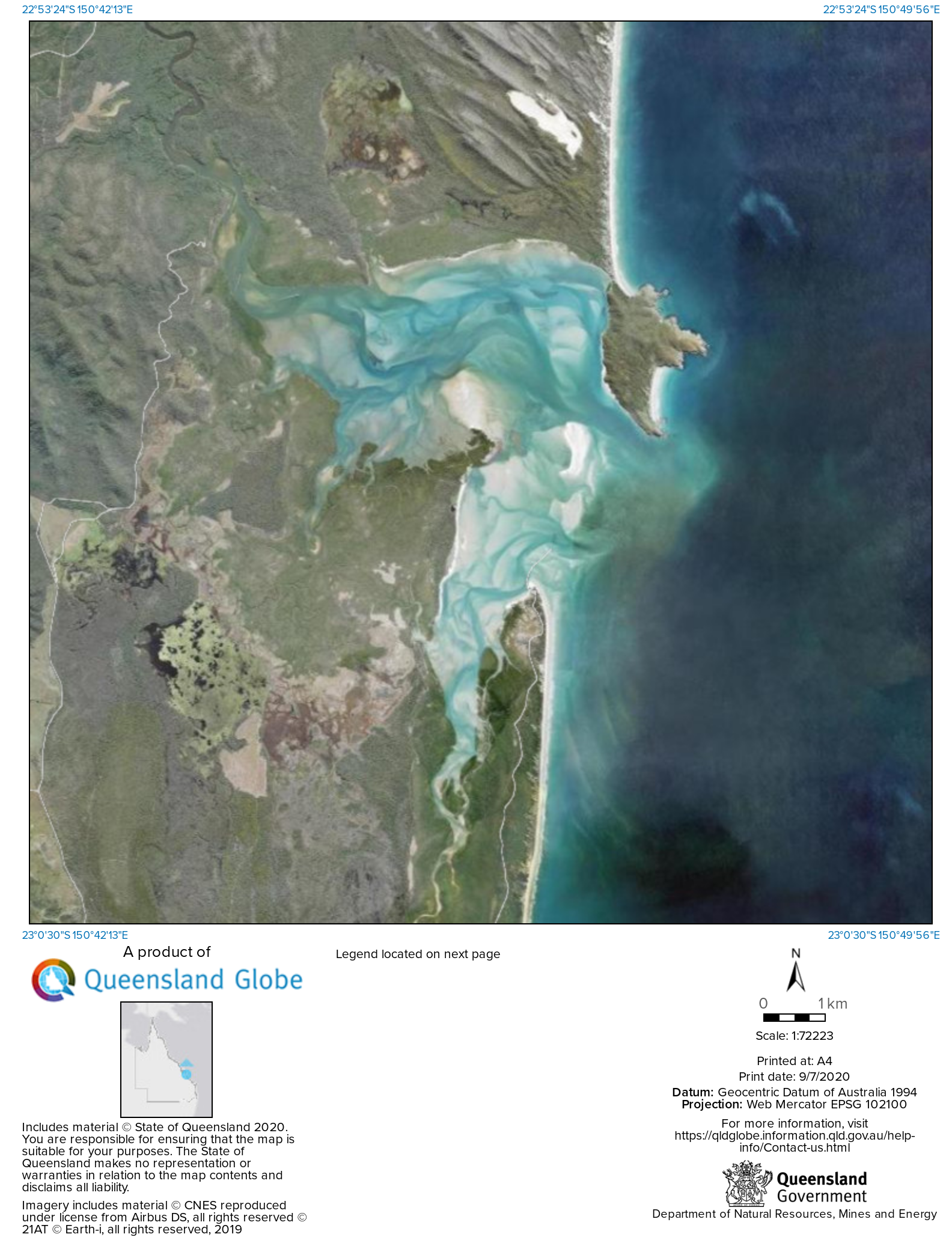
This broad, shallow and mostly sandy estuary 20km north of Yeppoon is the mutual mouth of Waterpark and Fishing Creeks.

The bay mostly dries at low tide, leaving shallow shifting channels, that finally run to sea past a rocky headland.

Careful trip planning and navigation is required.

Much of the bay is surrounded by national park, and the bay itself is part of the exciting Capricorn no-commercial-netting area proclaimed in 2015.

Outside the bay is excellent bluewater fishing, with the Keppels, Finlays, The Barge and Pinnacle producing good fish, and Karamea, Goodwin and the Douglas Shoals out wider for those with suitable boats.

Waterpark Creek has the two launch sites, with the upstream site at Corbetts Landing being sealed but with hazardous rocks located above and below in the creek.

Kellys Landing is further downstream but the road in is poor.

The creek upstream of Kellys Landing is closed to bait-netting, so bait must be collected in the bay for use in the creek.

Corio Bay has good yabbie banks and a broad spread of species. The most common are whiting, bream, flathead, barra, mangrove jacks , blue salmon, flounder and tarpon.

Tripletail are caught on occasion. Prawns are patchy.

There is a fair chance of picking up a barramundi in summer, a prospect that seems to have improved since net fishing was banned in the bay from 2018.

Barramundi are found in the low-tide holes and along rocky edges, or where baitfish gather.

The mouth of the inlet produces big jewfish on the turn of large tides.

Mud crabs are caught at times.

Corio Bay is famous for its whiting. In winter flathead can be prolific, and blue salmon schools provide furious action.

There are numerous fishable rockbars and holes above and below Corbetts Landing. The landing itself has a log wall which is a good land-based fishing spot.

Queenfish, trevally and mackerel are found near the bay’s entrance, with good grunter on any rough ground outside.

Waterpark Creek flows freshwater at the top.

Corio Bay’s Greenslopes and Sandfly Creek are not usually accessible at low tide.

To access Corbett’s Landing. Take the Byfield road and turn right at signpost 2km inside state forest.

North of the bay is Byfield National Park, which has some good fishing opportunities.

A 4WD is needed for most of the park.

Access via Byfield State Forest is a 30-minute drive north of Yeppoon via the sealed Yeppoon-Byfield Road.

Follow signposts along the unsealed road to Waterpark Creek visitor area.

The entrance to Byfield NP in Byfield State Forest, is 10km east of Waterpark Creek visitor area.

The 15km soft sand track from the entrance to the coast may take more than one hour. Intersections are marked.

Sandy Point car park is accessible in conventional vehicles – travel 5km north of Yeppoon and turn right (eastward) at the roundabout.

Continue for 10km on a sealed road past the Capricorn resort to the T-junction.

Turn right and follow the gravel road for 10km to Sandy Point.

Visitors can access the beach via a track from the carpark. Beach driving permits are required.

The beaches produce mostly blue and threadfin salmon, whiting, queenfish, trevally and flathead.

Waterpark Point is part of Byfield NP on the north side of Corio Bay, but the headland is only accessible by boat.

Small boats can launch from the beach in the Sandy Point section.

Five Rocks visitor area, 20km north of Corio Bay, includes a camp site and picnic area and has good fishing. It requires a four-wheel-drive.

Corio Bay and the Rockhampton region has crocodiles, so don’t swim or take risks when landing fish.

Other fishing spots near Corio Bay and Yeppoon include Ross Creek, Causeway Lake and Roslyn Bay Harbour, Coorooman Creek, Long Beach and Keppel Sands.

Corio Bay region fishing GPS marks

Perforated Island
22 39.335S 150 56.875E
A bommie – mixed reef fish and mackerel.

Liza Jane Shoal
23 18.340S 151 04.875e
A broad area – – mixed reef fish and mackerel.

Greasy Alley
23 02.870S 150 59.328E
Good place to collect baitfish, but also has pelagic fish at times.

Finlays Reef
23 00.201S 150 49.801E
Mixed reef fish and mackerel.


40 acre

23 08.986S 150 53.312E
This is a reef near Mial Island – mixed reef fish and mackerel

Ross Reef
23 06.317S 150 53.119E
This is a reef near Sloping Island – mixed reef fish and mackerel

The Pinnacles
22 50.422S 150 56.601E
These bommies have been mapped and are in the North Australian FISH FINDER book – catch grunter, jewfish, golden snapper (fingermark), coral trout, mackerel.

Flat Island
22 44.138S 151 00.110E
This is a reef and ledge – nannygai, mackerel, cobia.

Yeppoon tides
QLD fishing regulations
QLD marine parks
GBRMPA marine parks
QLD stocked waters
QLD dam levels
Byfield National Park

Email corrections, additions, pictures or video here.

Yeppoon, Queensland

Yeppoon’s nearby reefs and islands provide superb mackerel fishing, and there’s also good fishing in close along the coast.

The island edges, pinnacles and bommies have grey, spotted and spanish mackerel in season, and cobia.

Spanish mackerel to 30kg+ are caught, with ribbonfish (wolf herring) a popular bait with those targeting the big fish.

Even the spotted and grey mackerel are bigger-than-average fish in this region.

Mackerel show up all year, but are best from October to May.

Big red emperor are a drawcard on offshore grounds.

Reef fish caught on inshore grounds around Yeppoon tend to be fairly small.

To consistently catch big reef fish, boaters go 50km to 60km out.

Reef fish such as nannygai and red emperor move in to coastal reefs after rain, presumably to feed on prawns.

Fishing is usually best on big tides.

Daylight reef fishing on inshore reefs produces mostly coral trout, tuskfish and sweetlip.

Fishing around the Keppel Islands can be good, but note the GBRMPA green zones.

One of the more popular spots is around Hannah Rock off the south-east tip of Great Keppel Island. A micro chart of this spot is featured in the North Australian FISH FINDER book.

Reef fish are also caught in an area just n-w of Ross Reef, on the south side of North Keppel Island. This area can produce mackerel all year, along with sweetlip, cod and coral trout. Fish an incoming tide.

Coral bommies can be seen on the sandy bottom in this area.

Another good spots is “40 Acres” on the west side of Great Keppel and Miall Islands.

Plenty of mackerel are caught at the ends of the channel between Barren Island and The Child islands, and off the north-east point of The Child.

Corio Bay, Causeway Lake, Yeppoon Inlet and Cawarral Creek – all an easy drive from Yeppoon – have grunter, bream, flathead and whiting.

Barramundi, blue and threadfin salmon and mud crabs are caught in Cawarral Creek.

In the lead-up to summer, big barra are found on sheltered coastal rocks, but keep in mind the annual Queensland barramundi closed season.

The inner Rosslyn Bay marina near the mangroves has seasonal prawns, and is a good area to collect mullet, herring and gar.

Double Head and Rosslyn Bay marina rock walls are excellent landbased fishing spots.

There are camping-fishing opportunities in Byfield National Park at Corio Bay and Stockyard Point.

Yeppoon is very popular during holiday periods, be sure to book accommodation early.

Yeppoon tides
Yeppoon coastline
Yeppoon accommodation
Byfield National Park
QLD fishing regulations
QLD marine parks
GBRMPA marine parks
QLD stocked waters
QLD dam levels
Return to Qld Fishing Map

Email corrections, additions, pictures or video here.

Broad Sound, Queensland

Broad Sound is 150km from the nearest centres of Mackay and Rockhampton, and therefore sees relatively little recreational fishing pressure.

This is a shallow area swept by the biggest tides on the Australia’s East Coast, leaving vast drying flats at low tide.

Broad Sound is the innermost of two similar bays, the other being Shoalwater Bay, between which lies a peninsula that ends at the tiny fishing town of Stanage.

Such tidal conditions require careful planning of boat launching and retrieval, and navigation.

The big tides tend to concentrate fishing action into specific periods, depending on the species sought, but the fishing and crabbing can be superb.

Some creeks retain enough water to fish holes at low tide.

West Hill has a good creek, but with poor boat launching access.

South of West Hill is the tiny community of Clairview, with Clairview Creek 10km south of the town.

The launch site at Clairview is good, but dries towards low tide.

Further south, Broad Sound is drains several wide but shallow creeks.

On the largest tides, tidal bores occur in Broad Sound’s bigger creeks, a hazard for boaters.

Take note also of extensive GBRMPA green zones.

Broad Sound and Shoalwater bays are turbid except during neap tides, but outside of the inner islands lies clear water, with reef and pelagic fish.

Broad Sound has good habitat for barramundi, blue and king salmon, grunter and mud crabs, as well as bread and butter fish.

Broad Sound’s Charon Point, between the Styx and Herbert Rivers, can be reached by rough track from Marlborough.

Charon Point has a public reserve with camping and a 4WD boat launch, but the fishing area is restricted by green zones.

A base for estuary fishing and crabbing within Broad Sound is St Lawrence.

The township has a bank launch on St Lawrence Creek and bank fishing opportunities, both only available on the upper tide.

Large tides and shallow water make conditions tricky in all the local creeks.

Popeye mullet are usually abundant in this area, and make great livebait.

The easiest access to the Styx and the Hoogly waterways are from Charon Point.

The Bund Creek public launch site on the Waverley River, accessed via St Lawrence, was unuseable at the time of this post, being covered in several feet of mud.

There is no launch site at Ogmore.

Stanage is perhaps the best fishing location in this area, as its location at the top of the peninsula between Broad Sound and Shoalwater Bay.

Stanage gives access to a labyrinth of mangrove-lined creeks, as well as coastal reefs and islands.

This is arguably some of the best mud crab country in Australia, the local mud crabs are often huge.

With a bit of planning trailerboaters can catch barramundi and reef fish on the same day fishing out of Stanage.

Stanage Bay tides
Clairview tides
QLD fishing regulations
QLD marine parks
GBRMPA marine parks
QLD stocked waters
QLD dam levels

Email corrections, additions, pictures or video here.